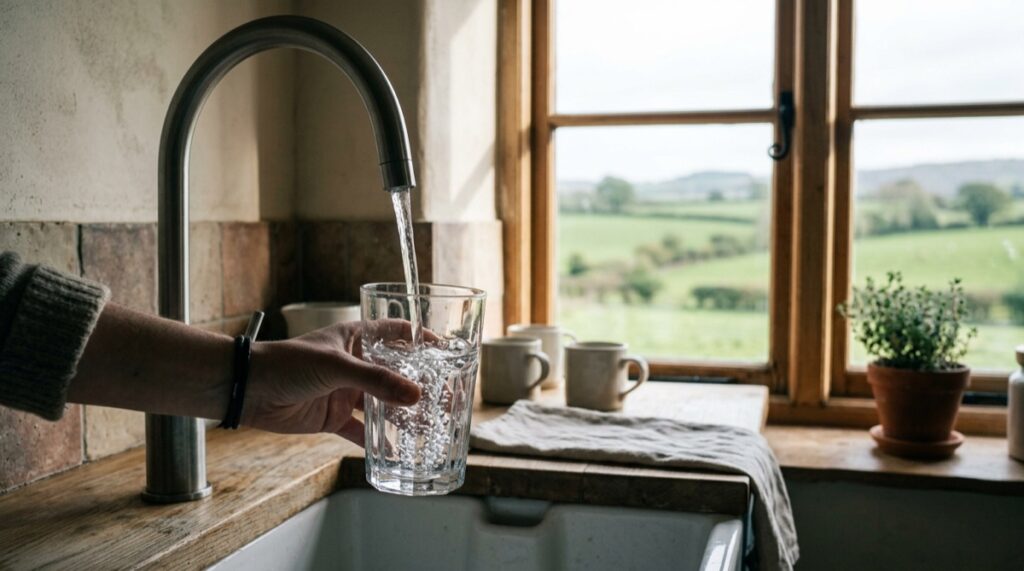
Nitrate is the most common chemical contaminant in private wells, and it is dangerous precisely because you cannot see, smell, or taste it. The U.S. EPA sets the legal limit at 10 mg/L (10 parts per million), measured as nitrate-nitrogen — above that line, the water is unsafe to drink, especially for infants. The one fact every well owner should know first: boiling does not remove nitrate — it concentrates it, so a habit people reach for to make water "safer" can quietly make this problem worse.
What Nitrates Are and How They Get Into Well Water
Nitrate (NO₃) is a naturally occurring nitrogen compound that dissolves easily in water and moves freely through soil into groundwater. A little nitrate is normal. The problem in private wells is excess nitrate from human activity, which has no taste, color, or odor — meaning a well can be well over the safe limit while the water looks perfectly clean.
- Agricultural fertilizer. Nitrogen fertilizer applied to crops and lawns is the largest single source. Rain and irrigation carry the surplus down into the aquifer, which is why farm-country wells consistently show the highest readings.
- Animal waste and manure. Feedlots, livestock pastures, and manure spread as fertilizer all leach nitrogen into groundwater.
- Septic systems. A failing or too-close septic system is a major nitrate source — one reason septic and well placement matters when buying a home with a well.
- Shallow and older wells. Shallow, poorly sealed, or aging wells are far more exposed to surface contamination. Sound casing and grouting is a key barrier, and depth matters too — see how deep a well should be.
Blue Baby Syndrome: The Risk to Infants and Pregnant Women
The headline danger of nitrate is a condition called methemoglobinemia, better known as blue baby syndrome. When an infant ingests too much nitrate, bacteria in the baby's stomach convert it to nitrite, which binds to hemoglobin and prevents the blood from carrying oxygen. According to the CDC and state health departments, infants under six months are the most vulnerable, because their stomach chemistry and developing systems can't defend against nitrite the way an older child or adult can.
The warning signs are visible: a bluish or grayish tint to the skin, particularly around the lips, hands, and feet, along with irritability, lethargy, and trouble breathing. In severe, untreated cases, methemoglobinemia can be fatal. If you ever see a baby turning blue, treat it as a medical emergency and call for help immediately.
- Infant formula is the biggest exposure path. Mixing powdered formula with high-nitrate well water delivers a concentrated dose to the most vulnerable person in the house.
- Pregnant women are also flagged. Health agencies advise pregnant and nursing women to avoid water above 10 mg/L, as elevated nitrate has been associated with pregnancy risks.
- "It tastes fine" is not protection. Because nitrate is tasteless and odorless, families often have no idea the water is unsafe until a test reveals it.
Safe Levels: The EPA 10 mg/L Limit Explained
The EPA's National Primary Drinking Water Regulations set an enforceable Maximum Contaminant Level (MCL) of 10 mg/L for nitrate (as nitrogen) and 1 mg/L for nitrite. That 10 mg/L number was set specifically to protect bottle-fed infants — the most sensitive group — so it carries a built-in margin for healthy adults. One source of confusion: some labs report results as "nitrate-nitrogen" (limit 10) and others as "total nitrate" (a limit of about 44 mg/L for the same water, since nitrate-nitrogen multiplied by 4.43 gives total nitrate). Always confirm which unit your lab used before judging the result.
| Item | Standard / Figure | What it means for you |
|---|---|---|
| Nitrate (as nitrogen) MCL | 10 mg/L (10 ppm) | EPA legal limit; above this, unsafe for infants and pregnancy |
| Nitrite MCL | 1 mg/L (1 ppm) | Stricter limit; nitrite is the more directly harmful form |
| Most-vulnerable group | Infants under 6 months | Blue baby syndrome risk; formula water is the main concern |
| Nitrate lab test | ~$20–$50 per test | Annually; twice yearly near farmland |
| Under-sink reverse osmosis | ~$300–$950 installed | Removes roughly 83–92% of nitrate at one tap |
| Whole-house anion (ion) exchange | ~$2,895–$3,295 installed | Treats every tap; resin lasts 3–7 years |
How and When to Test (Seasonal Spikes in Ag Areas)
Because nitrate is invisible to your senses, a lab test is the only way to know your level. The EPA and CDC recommend that every private well owner test for nitrate at least once a year, along with bacteria. Nitrate is not a one-and-done check — levels rise and fall with rainfall, irrigation, and the farming calendar, so last year's clean result doesn't guarantee this year's water is safe.
- Standard households: test once a year, ideally as part of a broader well maintenance checklist that also covers bacteria and pH.
- Near farmland or feedlots: test twice a year — once in spring after fertilizer is applied and once in fall — because that's exactly when seasonal spikes show up.
- New parents and home buyers: test before bringing home an infant, and always test before closing on a well property. See how to test well water for the full step-by-step.
- Use a certified lab, not just strips. Home strips are fine for a quick screen, but a state-certified lab gives the defensible number you need to make a health decision.
Why Boiling Makes Nitrates Worse, Not Better
This is the most important and most counterintuitive point in the entire topic. Boiling kills bacteria — so people reasonably assume it makes any "bad" water safer. With nitrate, the opposite is true. Nitrate doesn't evaporate; the water around it does. As you boil a pot, water leaves as steam while the nitrate stays behind in a shrinking volume — so the concentration actually goes up. The CDC and university extension programs explicitly warn never to boil water as a nitrate treatment.
The same logic rules out two other "fixes" that don't work: standard pitcher carbon filters and ordinary water softeners. A typical activated-carbon pitcher filter is designed for taste, chlorine, and some metals — it does not meaningfully remove nitrate. A salt-based softener handles hardness (calcium and magnesium) and won't touch nitrate either, though it does help with hard water and iron. If a product doesn't specifically say "nitrate reduction," assume it does nothing for this problem.
Removal: Reverse Osmosis, Ion Exchange, and Distillation
Only three home methods reliably remove nitrate. Which one fits depends on whether you need to protect a single drinking tap or the whole house, and on your budget.
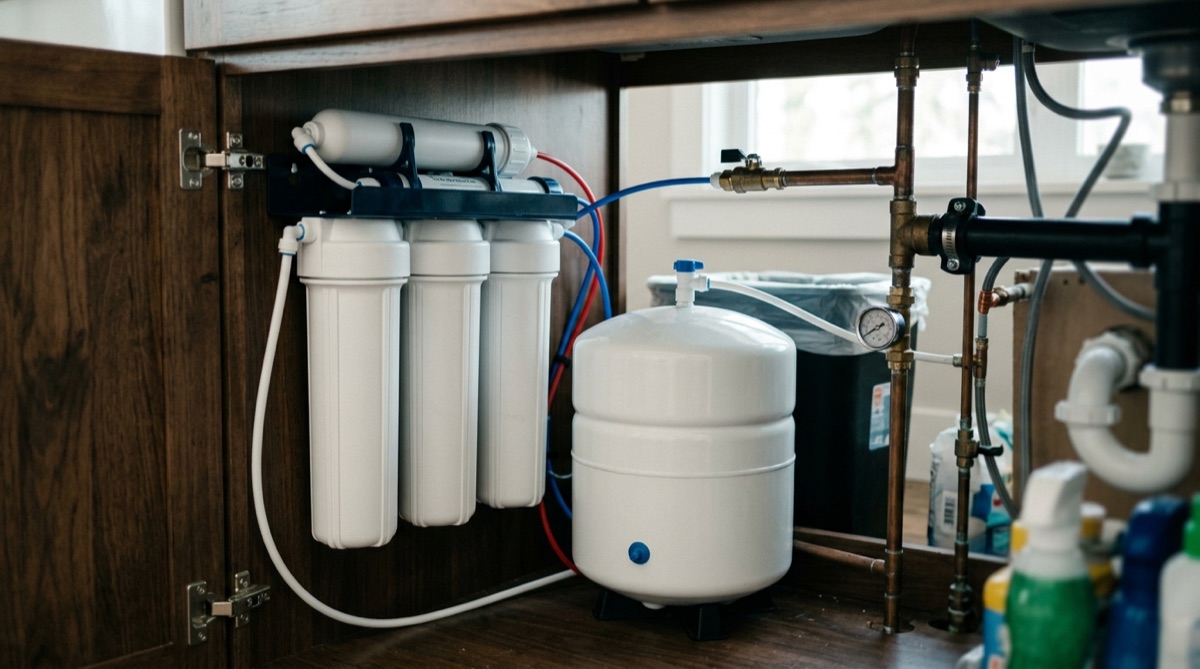
- Reverse osmosis (RO): the most popular home solution. An under-sink RO unit forces water through a membrane that rejects roughly 83–92% of nitrate, and runs about $300–$950 installed for a point-of-use system. Best for drinking and cooking water at one tap — a practical, affordable choice for most families. Explore it further in our well water treatment options guide.
- Anion (ion) exchange: uses a nitrate-selective resin that swaps nitrate ions for harmless chloride ions. A whole-house nitrate system runs roughly $2,895–$3,295 installed and treats every tap, with resin typically lasting 3–7 years before replacement. This is the route when you want nitrate-safe water throughout the home, not just the kitchen.
- Distillation: boils water and condenses the clean steam, leaving nitrate behind. It's highly effective and produces very pure water, but it's slow and energy-hungry, so it's best as a small countertop unit for drinking water only.
Whichever you choose, buy a unit certified for nitrate reduction (look for NSF/ANSI certification), and re-test your treated water after installation to confirm the system is actually delivering water below 10 mg/L.
Interim Steps While You Wait for Treatment
If a test comes back high and you don't yet have a treatment system, don't panic — but do change what goes in the bottle today. The goal is simply to keep high-nitrate water away from the most vulnerable people while you arrange a permanent fix.
- Switch infants and pregnant women to bottled water for drinking and for mixing formula. Use known-safe bottled or commercially distilled water — this is the single most protective step.
- Do not boil to "clean" the water. Boiling concentrates nitrate, so it makes formula water more dangerous, not less.
- Adults at moderate levels can generally keep using the water for bathing and dishes — nitrate isn't absorbed through skin in meaningful amounts — but follow your local health department's guidance for drinking.
- Call a licensed well professional. A contractor can confirm the result, check whether a septic system or well-construction problem is the source, and recommend the right treatment for your level and household.
Frequently asked questions
Is nitrate in well water dangerous for adults?
Healthy adults tolerate nitrate far better than infants, because adult stomach chemistry largely blocks the conversion to harmful nitrite. The 10 mg/L EPA limit is set to protect bottle-fed babies, the most sensitive group. That said, levels above the limit aren't ideal for anyone long-term, and pregnant women should avoid them — so it's worth treating elevated water for the whole household.
Can I taste or smell nitrate in my water?
No. Nitrate is completely colorless, odorless, and tasteless. Water can be well over the safe limit and look and taste perfectly normal. A laboratory test is the only reliable way to know your level.
Does a Brita or pitcher filter remove nitrate?
No. Standard activated-carbon pitcher filters are made for chlorine taste and some metals, and they do not meaningfully reduce nitrate. Only reverse osmosis, anion (ion) exchange, or distillation are proven to remove it. Always check that a product specifically claims certified nitrate reduction.
Does boiling well water remove nitrates?
No — and this is the most dangerous myth about nitrate. Boiling evaporates water but leaves the nitrate behind, so the concentration actually rises. The CDC specifically warns against boiling as a nitrate treatment. Never boil high-nitrate water to make formula.
How often should I test my well for nitrate?
The EPA and CDC recommend testing at least once a year. If you live near farmland, feedlots, or heavy fertilizer use, test twice a year — in spring after fertilizer is applied and again in fall — because nitrate spikes seasonally. Always test before bringing home a new baby.
What's the cheapest way to get nitrate-safe drinking water?
For most families, an under-sink reverse osmosis unit (about $300–$950 installed) is the most cost-effective solution, since it protects the tap you actually drink and cook from. Whole-house anion exchange costs more (roughly $2,895–$3,295) but treats every tap if that's what you need.
High nitrate is a fixable problem, but it starts with knowing your number and getting the right system installed correctly. If your test came back near or above 10 mg/L, the smartest next step is a professional who knows your local groundwater and well construction. Find a licensed well contractor near you to test, diagnose the source, and recommend treatment that actually removes nitrate.
Sources: U.S. EPA, National Primary Drinking Water Regulations (nitrate 10 mg/L, nitrite 1 mg/L); U.S. EPA, Protect Your Home's Water; CDC, Guidelines for Testing Well Water; Minnesota Department of Health, Nitrate in Well Water; The Institute for Environmental Research and Education, "Does Boiling Water Remove Nitrates?"; HomeGuide and Angi, Reverse Osmosis System Cost (2026); Mid Atlantic Water, Nitrate Filter Cost & Maintenance (2026). Figures reflect 2026 U.S. ranges and may vary by region, lab, and system.

Author: Well Driller Finder Editorial Team
The Well Driller Finder editorial team researches and writes our guides on water-well drilling, pumps, and well water for homeowners across the US and Canada. We translate current cost data, NGWA and state well-construction standards, and EPA and CDC guidance into clear, practical answers. What we stand for: honest, independent help. Every price and claim is researched and fact-checked against multiple 2026 sources — never guessed, never borrowed from a single advertiser. We answer to homeowners, not to the companies we write about, because our only goal is to help you make a confident, well-informed decision about your water.
Find verified, local contractors who handle new installations, pump service, and water quality testing — in your area.