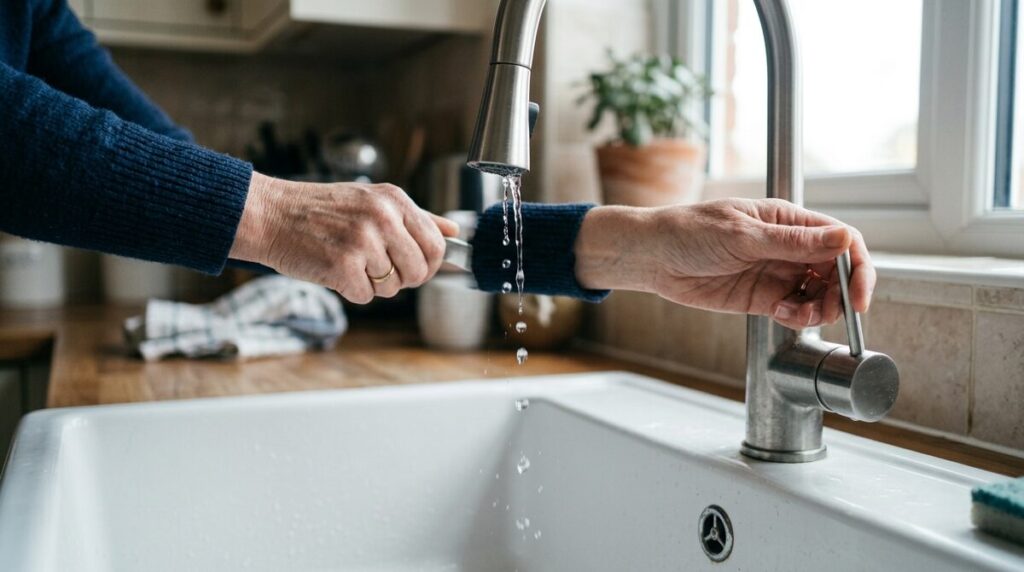
A well that's "running dry" usually means the water level in the aquifer has dropped below your pump's intake, so the pump pulls air instead of water. The good news, per the USGS: this often isn't permanent. As rain and underground flow recharge the aquifer, the water level can come back. Your fix depends on the situation, anywhere from a few hundred dollars to lower the pump up to a new well at a national average of about $7,500.
What "running dry" actually means
The USGS puts it plainly: a well "is said to have gone dry when water levels drop below a pump intake." That doesn't mean the well is permanently lost. The water level may return as recharge increases. The National Ground Water Association (NGWA) uses a glass-of-water analogy that's worth remembering: "If you drink and don't lower the straw toward the glass bottom, you will end up sucking air. There is still water in the glass; your straw is just sitting above it."
That analogy explains the cheapest fix below. Sometimes the water is still there, and the pump is simply sitting too high in the column.
Warning signs your well is going dry
These symptoms usually creep in slowly, then come to a head during a dry spell or a heavy-use weekend. Watch for:
- Air sputtering or spitting at the taps. The pump is pulling air from above the water surface.
- Sudden pressure drops when you run two or three fixtures at once.
- Cloudy, muddy, or gritty water with sediment, a sign the pump is drawing near the bottom of the well.
- The pump running constantly or short-cycling (clicking on and off).
- Longer recovery between heavy uses, like waiting for pressure to come back after laundry.
- A new sulfur, metallic, or musty taste or smell, which can mean water is being pulled from deeper, more stagnant zones.
One important caveat from Epp Well Solutions: sputtering air doesn't always mean a low water table. Worn seals, a cracked foot valve, or loose fittings can let air into the line and mimic a dry well. So can a failing pump itself, which is worth ruling out, since Penn State Extension says "the most frequent cause is a malfunctioning or worn-out submersible pump." If you're seeing these signs, our guide to the signs of a failing well pump can help you tell the two problems apart.
Why wells go dry
Most dry-well episodes trace back to one of a few causes, and the cause points you to the right fix.
Drought and over-pumping. The USGS explains that a well goes dry when it's pumped faster than the surrounding aquifer is recharged by precipitation or underground flow. That's most common during droughts with large rainfall deficits.
Nearby wells drawing the level down. Aquifers can stretch across large distances, so the USGS notes that heavy withdrawals from other nearby wells can lower your water level too, a regional drawdown you didn't cause and can't directly control.
Shallow construction. Shallow wells screened in unconfined water-table aquifers respond more directly to a lack of rain and are more vulnerable to going dry than deeper wells in confined aquifers. If you're not sure how your well stacks up, our guide to how deep a well should be walks through the trade-offs.
A failing pump (not the aquifer at all). Again, Penn State flags a worn-out submersible pump as the single most frequent cause of "well failure." Before you spend on the aquifer, make sure the equipment isn't the real culprit.
What to do, from cheapest to most expensive
There's no single "national average dry-well repair cost," because the price depends entirely on which fix your situation actually calls for. Here are the options, roughly cheapest to priciest.
1. Conserve water and wait it out
If the cause is a temporary drought, Penn State Extension recommends water conservation: shorter showers, full laundry and dishwasher loads, and spacing out heavy use. Be aware that drought declarations can legally restrict water use by private well owners. Deeper wells often ride out a dry spell, but NGWA cautions that recovery isn't instant. One rain event isn't enough; it "will take more rainfall, maybe several months, to filter down to their depth."
2. Lower the pump
If there's still water in the well but your pump is sitting above it, a contractor can measure the water level and lower the submersible pump to keep it submerged. Pumps are typically set 20 to 30 feet below the water level. This is the classic cheap, fast fix when the aquifer has water and the pump simply needs to go deeper.
There's no standard published price for "lower the pump," so the figure in the table below is an assembled estimate, built from the labor to pull and reset the pump plus per-foot pipe and wire, not a single quoted service. Get a real quote before you budget on it.
3. Hydrofracturing (for bedrock wells)
If your well is drilled into rock and the yield is just low, hydrofracturing injects water at high pressure (roughly 1,500 to 3,000+ PSI) to open and clean fractures in the bedrock so more water can flow in. SC Well Service, a provider of the service, reports that it improves yield in roughly 70 to 80% of treated wells, often by about 2 to 5 times the pre-treatment flow, though results vary well to well. At $3,000 to $8,000, it's typically far cheaper than drilling a new well.
4. Deepen the existing well
Drilling the same well deeper can reach a lower water source. But Penn State Extension is blunt about the risk: deepening may not increase the well's yield, and it could produce water of a different quality. NGWA adds that going deeper can expose you to more mineralized water, higher salinity, hydrogen sulfide, iron, manganese, or other metals. Both advise consulting a local well driller or hydrogeologist first.
5. Drill a new well
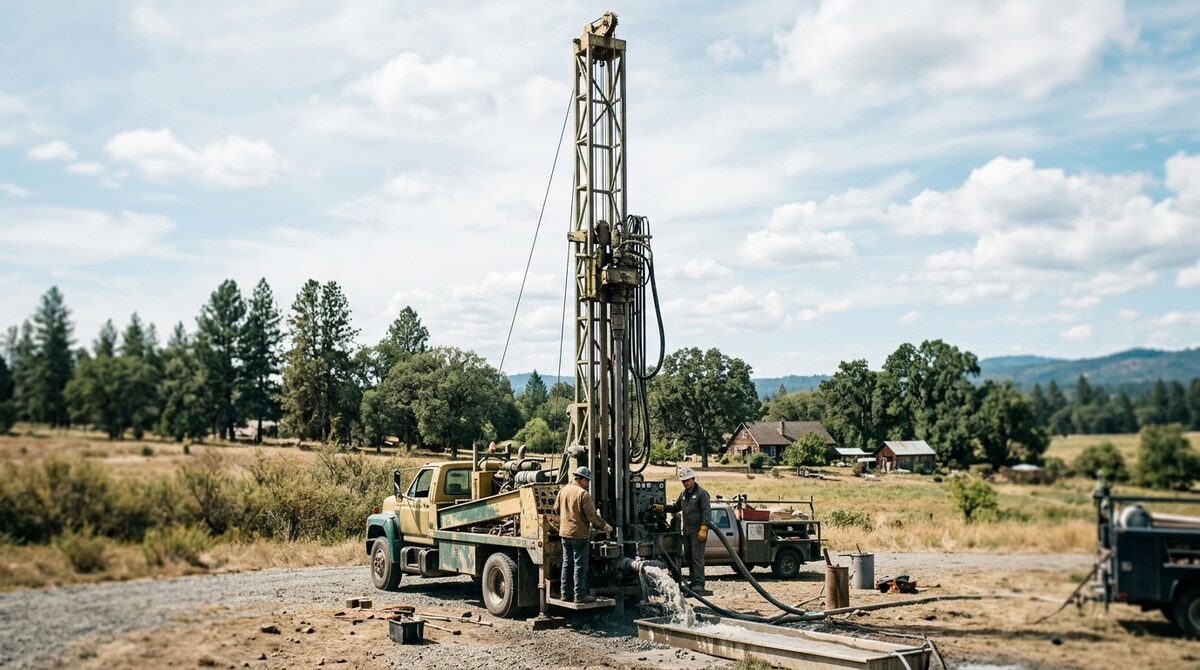
The most expensive option, and sometimes the only one. A complete new system averages about $7,500 nationally, with drilling typically $25 to $65 per foot depending on geology (sand and gravel at the low end, granite and hard rock at the high end). You can size your own job with our well depth calculator, or see the full picture in our well drilling cost guide.
Dry-well repair and replacement costs (2026)
Use these as planning ranges. Geology, depth, and casing condition move the number a lot.
| Fix | Typical cost (USD) | When it fits |
|---|---|---|
| Lower the pump (assembled estimate) | $800–$1,500 labor + drop pipe ($4–$8/ft) and wire ($2–$4/ft) | Water still in the well; pump sitting too high |
| Hydrofracturing | $3,000–$8,000 (some jobs from ~$2,000) | Low-yield bedrock well |
| Deepen existing well | $1,500–$6,000 typical; larger jobs can reach $15,000+ ($35–$75/ft of added depth) | Sound casing; water source is deeper |
| Well pump replacement | ~$1,000–$2,800 (avg around $1,800); deep-well 300–400 ft $2,800–$5,500 | Worn-out or failed pump |
| Drill a new well | $3,000–$15,000 (avg ~$7,500); $25–$65/ft, permit $0–$500 | 150+ ft needed, bad casing, or deepening costs too much |
For context, the deep-well pump line matters because depth is the biggest cost multiplier, adding roughly $500 to $1,000 per extra 100 feet. Casing, when it has to be extended, runs about $15 to $30 per foot.
Deepen the well or drill a new one?
When the aquifer truly needs more depth, you'll face this fork. SC Well Service offers a practical rule of thumb (treat it as guidance, not gospel): deepening usually wins when you need roughly 50 to 100 more feet and your casing is sound. Drilling new is the better call at 150+ feet, with damaged or undersized casing, or when deepening would cost more than about 60% of a new well. Given Penn State's warning that deepening doesn't guarantee more water, get a driller or hydrogeologist to assess your specific well before committing.
Frequently asked questions
Does a dry well mean my well is ruined?
Usually not. The USGS defines a "dry" well as one where the water level has dropped below the pump intake, and it specifically notes the level may return as recharge increases. Often the water is still down there; the pump just needs to be lowered, or the aquifer needs time and rain to recover.
How long until my well recovers after a drought?
It depends on depth and how much rain falls. NGWA notes that deeper wells affected by drought may need "more rainfall, maybe several months, to filter down to their depth." One storm rarely fixes it; what helps is slow, soaking rain over a stretch of time.
Should I keep running the pump if the water sputters?
No. Turn it off. Well-service technicians warn that running a submersible pump dry can overheat it and cause premature, permanent failure, which turns a cheap problem into an expensive one.
Is it cheaper to deepen my well or drill a new one?
Deepening is usually cheaper for moderate jobs ($1,500–$6,000 typical) and tends to make sense for about 50 to 100 more feet with sound casing. A new well averages around $7,500. If you'd need 150+ feet, your casing is in poor shape, or deepening would top roughly 60% of a new-well price, drilling new is often the smarter spend.
Could it be the pump and not the water table?
Very possibly. Penn State Extension calls a worn-out submersible pump the most frequent cause of well failure, and Epp Well Solutions notes that worn seals, a cracked foot valve, or loose fittings can let air into the line and mimic a dry well. It's worth ruling out the equipment before you pay to touch the aquifer.
What's the single cheapest fix?
Lowering the pump, when there's still water in the well and the pump is simply sitting above it. A contractor measures the water level and resets the pump 20 to 30 feet below it. It's the smallest job here, well under the cost of deepening or drilling new.
Bottom line
Before you assume the worst, confirm the cause. A sputtering faucet might mean a low water table, a leaky line, or a failing pump, and each carries a very different price tag. Turn the pump off to protect it, then get a qualified well professional to measure your water level and diagnose the real issue. See full well drilling costs if a new well is on the table, or find a licensed driller near you to assess what's actually happening underground.
Sources: USGS Water Science School (2026), NGWA WellOwner.org (2026), Penn State Extension (2026), Epp Well Solutions (2026), Blue Heron Water (2026), Skillings & Sons (2026), WellDrillingCosts.com (2026), SC Well Service (2026), Today's Homeowner (2026), LawnStarter (2026), HomeGuide (2026)

Author: Well Driller Finder Editorial Team
The Well Driller Finder editorial team researches and writes our guides on water-well drilling, pumps, and well water for homeowners across the US and Canada. We translate current cost data, NGWA and state well-construction standards, and EPA and CDC guidance into clear, practical answers. What we stand for: honest, independent help. Every price and claim is researched and fact-checked against multiple 2026 sources — never guessed, never borrowed from a single advertiser. We answer to homeowners, not to the companies we write about, because our only goal is to help you make a confident, well-informed decision about your water.
Find verified, local contractors who handle new installations, pump service, and water quality testing — in your area.