
That rotten-egg smell in your well water is hydrogen sulfide (H2S) gas. It comes from one of three places: the gas occurs naturally in your aquifer, sulfur bacteria are growing in your well or plumbing, or a chemical reaction is happening inside your water heater. The fix depends on which source it is, and the right repair can run anywhere from a $150 anode-rod swap to a $1,500-$3,500 whole-house filter.
What causes the rotten-egg smell?
The smell is hydrogen sulfide, and the Minnesota Department of Health traces it to three sources. The first is naturally occurring H2S, produced by decay and by chemical reactions between groundwater and the soil and rock in your aquifer. The second is sulfur bacteria living in the groundwater, the well, or the pipes. The third is a reaction inside your water heater, which is why the smell often shows up only in hot water.
Geology plays a big role. Penn State Extension finds hydrogen sulfide problems are most common in wells drilled into acidic bedrock like shale and sandstone. If your well taps that kind of rock, you are more likely to get the odor, and it may have nothing to do with bacteria or your plumbing.
You can usually smell H2S at very low levels. Virginia Tech Extension notes that most people detect it at about 0.5 to 1.0 mg/L, which is well below levels associated with health effects. In other words, you will smell the gas long before it reaches a concentration that matters for your health.
Is sulfur-smelling well water dangerous?
For drinking, generally no. At typical household levels, hydrogen sulfide in water does not present a health risk, according to NGWA's Wellowner.org. The gas usually makes water taste and smell undrinkable long before it could reach a harmful concentration. That is also why the EPA does not regulate hydrogen sulfide under its primary or secondary drinking-water standards. (Sulfate, a related compound, does have an EPA secondary standard of 250 mg/L.)
The real danger isn't in your glass, it's in confined spaces. Hydrogen sulfide gas can build up to toxic and flammable levels inside a wellhead, pit, or other enclosed area, and NGWA calls it a leading cause of injury and death in the groundwater industry. For that reason, only a professional should ever enter a wellhead or pit area. Don't go in yourself.
There's a slower cost, too. Virginia Tech Extension notes that hydrogen sulfide corrodes plumbing and metal appliance parts, can corrode even stainless steel, darkens silverware, and discolors copper and brass fixtures. Over time, it wears on your home's water system as well as your patience.
How to find the source (the hot-vs-cold test)
Before you buy anything, run a simple diagnostic. Let the house sit unused for several hours, then run the cold and hot faucets and pay attention to where the smell is, per guidance from the Minnesota Department of Health and Virginia Tech:
- Smell only in hot water? The problem is almost certainly your water heater. The magnesium sacrificial anode rod inside it can chemically reduce sulfate to hydrogen sulfide gas, and it attracts sulfate-reducing bacteria. This is the most common and the cheapest fix.
- Smell in cold water at every faucet? The hydrogen sulfide is in your groundwater. That points to a whole-house treatment solution rather than a single appliance.
- Smell that fades as the water runs? That usually means bacteria living in the well or the plumbing, not the aquifer itself.
If you want to confirm the level with a lab test, note one quirk: hydrogen sulfide testing has to be done in your home, or the sample chemically stabilized before shipping, because the gas escapes the water on the way to the lab (Penn State Extension). A standard mail-in kit won't give you an accurate H2S reading. For a step-by-step on doing this right, see our guide to how to test your well water and our water quality testing guide.
How to fix sulfur-smelling well water
The right fix depends on the source and the concentration. Here are the main options, from cheapest to most involved.
If it's only the hot water: replace the water heater's magnesium anode rod with an aluminum or aluminum-zinc rod. Penn State Extension and Bonney both recommend this swap because those alloys interact far less with sulfate-reducing bacteria. SC Well Service prices the job at $150-$300 installed by a plumber. It's the single best value if the smell is hot-side only.
If bacteria are the cause: shock chlorination is the standard first step. A pro pours a chlorine solution into the well, circulates it through the plumbing, and flushes it after roughly 12 to 24 hours of contact time (SC Well Service). It kills the sulfur bacteria, but the catch is they can recolonize, so the smell sometimes comes back. Persistent cases need a permanent treatment system.
If the H2S is in the groundwater: the treatment is matched to concentration, according to the Minnesota Department of Health:
- Low levels (under about 1 mg/L): activated or catalytic carbon filtration.
- Moderate levels: oxidizing media filtration, such as manganese greensand. Sources disagree slightly on the ceiling. Minnesota Health and Virginia Tech say it works up to roughly 6 mg/L, while Penn State's table says 2-3 mg/L, so treat about 2 to 6 mg/L as an approximate design guideline, not a hard limit.
- Higher levels: continuous chlorination, aeration, ozonation, or potassium permanganate followed by filtration. One caution: aeration alone is generally not used above about 2 mg/L, because Penn State Extension finds it can't reliably knock the gas down to non-detectable at higher concentrations.
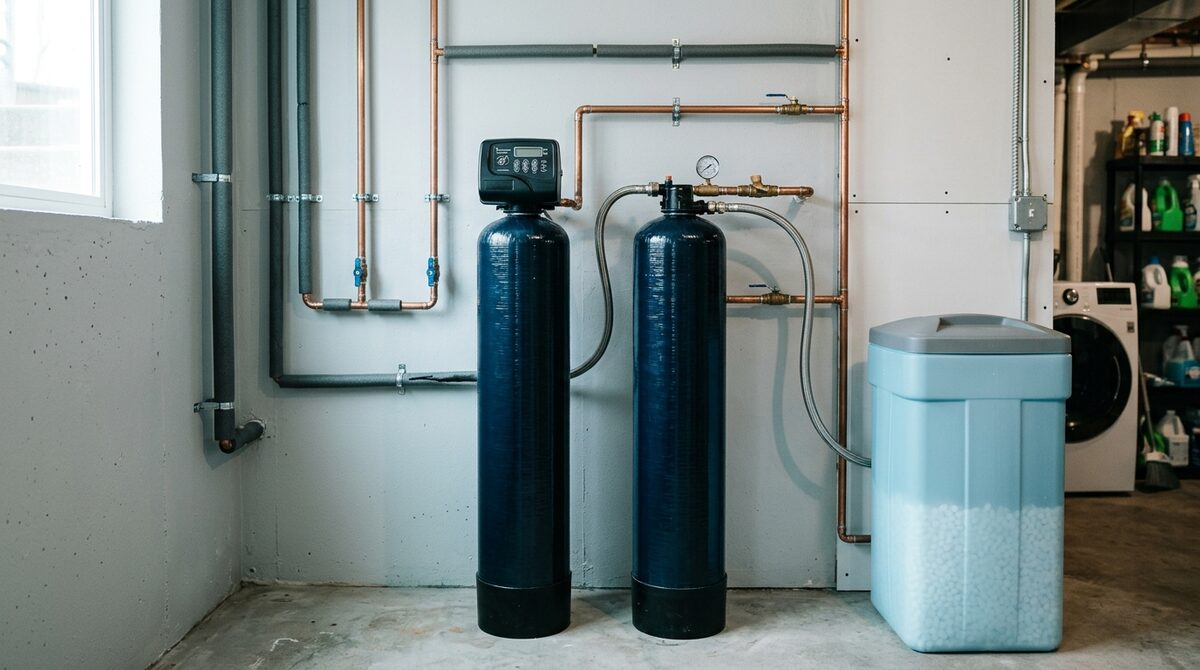
A popular modern option is the air-injection oxidation (AIO) filter with catalytic media like Katalox Light. Mid-Atlantic Water reports these single-tank systems remove iron, manganese, and hydrogen sulfide with no chemicals or salt, handling H2S up to 10 ppm. The media lasts 8 to 10 years before a re-bed (roughly $400-$600 when that time comes). It handles most groundwater cases on its own. For a fuller breakdown of every approach, see our rundown of well water treatment options.
What does it cost to fix?
Here are 2025-2026 national ballpark ranges. These come from contractor and home-services sources, so treat them as directional, and get a quote for your area and your water.
| Fix | Typical cost | Best for |
|---|---|---|
| Lab water test | $50-$300 | Confirming the source and level |
| Anode rod swap (magnesium to aluminum/zinc) | $150-$300 installed | Smell in hot water only |
| Shock chlorination (professional) | $200-$500 one-time | Killing sulfur bacteria (first step) |
| Carbon / catalytic-carbon filter | $250-$2,000 installed | Low H2S (under ~1 mg/L) |
| Aeration system | $1,500-$3,500 installed | Moderate H2S (up to ~2 mg/L) |
| Air-injection oxidation (AIO) iron/sulfur filter | $1,500-$3,500 installed | A chemical-free, salt-free fix |
| Iron/sulfur oxidizing filter | $900-$4,000 installed | Combined iron and sulfur |
| Chemical injection (chlorine or peroxide) | $1,500-$4,000 installed + chemicals | High H2S (above ~6 mg/L) |
| Whole-house treatment (overall average) | $1,200-$3,600 installed (avg ~$2,300) | Typical single-issue homes |
| Comprehensive multi-stage system | $2,500-$10,000 installed | Multiple water problems at once |
A few line items to budget around the headline price. Professional labor runs $50-$150 per hour, with minimum service fees of $100-$300. Ongoing filter media or cartridge replacements run $30-$200 each. And if you buy the equipment alone, an entry-level point-of-entry sulfur filter (such as a Katalox Light air-injection unit) runs $1,895 for a 1.0 cu ft tank up to $3,295 for a 3.5 cu ft tank, hardware only, no install labor. Don't confuse that equipment-only number with the installed AIO figure above.
Frequently asked questions
Is it safe to drink well water that smells like rotten eggs?
At typical household levels, generally yes. NGWA reports hydrogen sulfide in water doesn't usually present a health risk at the concentrations homeowners encounter, and the smell tends to make water undrinkable long before it could reach a harmful level. The bigger concern is the gas collecting in confined spaces like a wellhead or pit, which only a professional should enter.
Why does only my hot water smell like sulfur?
Because the reaction is happening inside your water heater. The magnesium sacrificial anode rod can convert sulfate into hydrogen sulfide gas and attracts sulfate-reducing bacteria. Swapping that rod for an aluminum or aluminum-zinc one usually solves it, for about $150-$300 installed.
Will shock chlorination get rid of the smell for good?
Not always. Shock chlorination kills the sulfur bacteria causing the odor, but bacteria can recolonize the well and plumbing over time, so the smell may return. If it keeps coming back after a shock treatment, you likely need a permanent filtration system rather than another round of chlorine.
Does the smell mean my water is contaminated or unsafe?
Not necessarily. Hydrogen sulfide is usually an aesthetic nuisance, not a contamination warning, and the EPA doesn't even regulate it as a drinking-water standard. That said, a sulfur smell is a good prompt to test your water, since the same test can flag other issues at the same time.
Can a rotten-egg smell damage my plumbing?
Yes, over time. Virginia Tech Extension notes hydrogen sulfide corrodes plumbing and metal appliance parts, can corrode even stainless steel, darkens silverware, and discolors copper and brass fixtures. Treating it protects your home's water system, not just the smell at the tap.
Get the right fix the first time
The cheapest mistake to avoid is buying a $2,000 whole-house system when a $150 anode rod would have done the job, or vice versa. Run the hot-vs-cold test, confirm the level with an in-home or stabilized lab test, then match the fix to where the smell is coming from. If you want the full picture on what well-water work costs, see our well water treatment options guide, and when you're ready to move, find a licensed well contractor near you who can test, diagnose, and install the right system.
Sources: Minnesota Department of Health, Hydrogen Sulfide in Well Water (2025); Penn State Extension, Hydrogen Sulfide (Rotten Egg Odor) in Water Wells (2025); Virginia Tech Extension, Sulfate and Hydrogen Sulfide in Household Water (2025); NGWA / Wellowner.org, Hydrogen Sulfide (2025); US EPA, Secondary Drinking Water Standards (2025); HomeAdvisor, Well Water Treatment Systems Cost (2025); SC Well Service, Well Water Smells Like Rotten Eggs / Well Chlorination Cost (2025); SoftPro / Quality Water Treatment, Oxidation System Prices (2025); Mid-Atlantic Water, Sulfur Filters for Well Water (2025); Bonney Plumbing, Guide to Sacrificial Anode Rods and Smelly Water (2025).

Author: Well Driller Finder Editorial Team
The Well Driller Finder editorial team researches and writes our guides on water-well drilling, pumps, and well water for homeowners across the US and Canada. We translate current cost data, NGWA and state well-construction standards, and EPA and CDC guidance into clear, practical answers. What we stand for: honest, independent help. Every price and claim is researched and fact-checked against multiple 2026 sources — never guessed, never borrowed from a single advertiser. We answer to homeowners, not to the companies we write about, because our only goal is to help you make a confident, well-informed decision about your water.
Find verified, local contractors who handle new installations, pump service, and water quality testing — in your area.